NEET Biology
Plant Kingdom

Algae
- Algae are chlorophyll-bearing, simple, thalloid, autotrophic and largely aquatic plants.
- They occur in moist stones, soils, and wood or in association with fungi and animals.
Example-1. Lichen is the association of algae with fungi.
- Algae grow on the body of sloth bear.
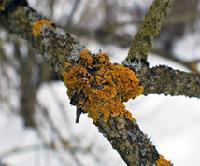
Fig. lichen

Fig. sloth bear
- Some algae are unicellular, some exist in colonial or filamentous forms, and a few marine plants form massive plant bodies.
- The algae reproduce by vegetative, asexual, and sexual methods.
- Vegetative reproduction is by fragmentation, where each fragment develops into a thallus.
- Asexual reproduction is by the production of flagellated zoospores which on germination give rise to new plants.
- Sexual reproduction takes place through fusion of two gametes, if the gametes with or without flagella are similar in size they are isogamous, if dissimilar in size they are anisogamous , and if female gamete is large, non-motile and male gamete is smaller, motile, the gametes are termed as
- Isogamous gametes with flagella are seen in Chlamydomonas and without flagella are seen in Spirogyra , anisogamous gametes are seen in in some species of Chlamydomonas, and oogamous gametes are seen in Volvox, Fucus.
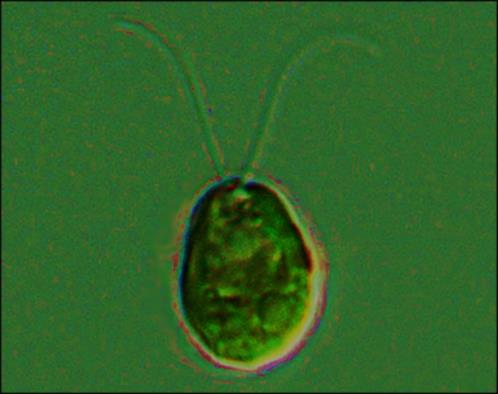
Fig. Chlamydomonas
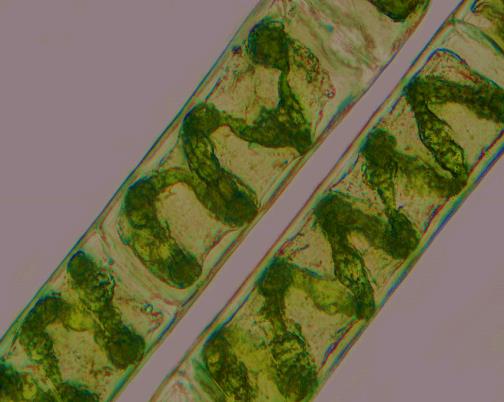
Fig. Spirogyra
- Algae are useful to human beings in the following ways:
- Fix carbon dioxide through photosynthesis and increase the level of dissolved oxygen.
- Primary producers of energy-rich compounds.
- Many species of Porphyra, Laminaria, and Sargassum are used as food.
- Certain marine brown and red algae produce large amounts of hydrocolloids which are used commercially.
- For example- align is produced by brown algae and carrageen is produced by red algae
- Agar, one of the commercial products obtained from Gelidium and Gracilaria are used to grow microbes and in preparations of ice-creams and jellies.
- Chlorella and Spirullina are unicellular algae, rich in proteins and are used as food supplements.
- The algae are divided into three main classes: Chlorophyceae, Phaeophyceae and Rhodophyceae.
- Chlorophyceae
- Commonly called as green algae.
- They are usually grass green due to the dominance of pigments chlorophyll a and b.
- Most of the members have one or more storage bodies called pyrenoids located in the chloroplasts, which contain protein besides starch.
- Green algae usually have a rigid cell wall made of an inner layer of cellulose and an outer layer of pectose.
- Vegetative reproduction usually takes place by fragmentation or by different types of spores, asexual reproduction is by flagellated zoospores produced in zoosporangia, and the sexual reproduction by the formation of sex cells and it may be isogamous, anisogamous or oogamous.
- Some commonly found green algae are: Chlamydomonas, Volvox, Ulothrix, Spirogyra and Chara.
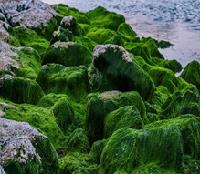
Fig. Green algae
- Phaeophyceae
-
- Phaeophyceae or brown algae are found primarily in marine habitats.
- They possess chlorophyll a, c, carotenoids and xanthophylls.
- They vary in color from olive green to various shades of brown depending upon the amount of the xanthophyll pigment, fucoxanthin present in them.
- Food is stored as laminarin or mannitol.
- The vegetative cells have a cellulosic wall usually covered on the outside by a gelatinous coating of align.
- The plant body is usually attached to the substratum by a holdfast, and has a stalk, the stipe and leaf like photosynthetic organ – the frond.
- Vegetative reproduction takes place by fragmentation, asexual reproduction is by biflagellate zoospores that are pear-shaped and have two unequal laterally attached flagella.
- Sexual reproduction may be isogamous, anisogamous or oogamous where the gametes are pyriform and bear two laterally attached flagella.
- The common forms are Ectocarpus, Dictyota, Laminaria, Sargassum, and Fucus.
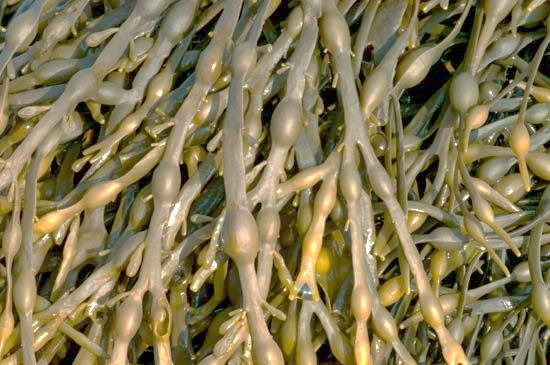
- Fig. Brown algae
-
- Rhodophyceae
-
- Rhodophyceae are commonly called red algae because of the predominance of the red pigment, r-phycoerythrin in their body.
- The red thalli of most of the red algae are multicellular.
- The food is stored as floridean starch.
- The red algae usually reproduce vegetatively by fragmentation, reproduce asexually by non-motile spores, and sexually by non-motile gametes.
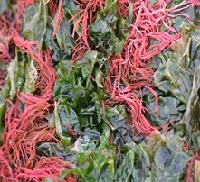
Fig. Red algae
NEET Biology Plant Kingdom NCERT Chapter 3 Free Notes for Best Revision
Revision of NEET Biology Plant Kingdom is a crucial aspect of effective learning. Revision plays a vital role in the learning process and is especially important before exams. Here are some key points you can consider emphasizing in your content:
- Retention and Memory: Regularly reviewing and revisiting the material of NEET Biology Plant Kingdom helps reinforce the concepts in students' minds. It strengthens memory pathways, making it easier to recall information during exams and beyond.
- Consolidation of Knowledge: When you revise notes, you are essentially consolidating your knowledge. This means connecting new information with what you already know, making the overall understanding more robust.
- Identifying Knowledge Gaps: Revision allows students to identify any gaps in their understanding or areas where they need further clarification. This gives you a chance to seek help or delve deeper into those topics. For detailed understanding, you can always refer to the videos of Plant Kingdom NEET Biology NCERT Chapter 3 on LearnoHub.com
- Building Confidence: As you revise Plant Kingdom NEET Biology and become more familiar with the content, your confidence in your abilities grows. Confidence is a crucial factor in exam performance as it reduces anxiety and allows you to approach exams with a positive mindset.
- Different Revision Techniques: Use a variety of revision techniques such as summarizing notes, creating flashcards, practicing past papers, discussing concepts with peers, and teaching others. Different techniques work for different students, and it's essential to find what suits you the best. You can also attend the LIVE Revision classes on LearnoHub.com or watch the LIVE Revision Race videos of LearnoHub on Plant Kingdom NEET Biology NCERT Chapter 3.
- Spacing Effect: Spacing out revision sessions over time, rather than cramming all at once, has been shown to improve long-term retention. Create a revision schedule leading up to the exams to allow for spaced practice.
- Regular Revision over Cramming: Regular and consistent revision throughout the academic year is very important. Waiting until the last moment to cram everything can be overwhelming and less effective than spaced-out revision.
- Self-Assessment: Assess your understanding periodically through quizzes or self-tests. This helps you to gauge your progress and identify areas that need further attention. Refer NEET Plant Kingdom Online Tests.
- Balanced Approach: Remind students to strike a balance between revision and other activities. Adequate rest, exercise, and relaxation are essential for optimal learning and performance.
- Seeking Help: If you face difficulties during the revision process, Refer the videos of NEET Biology Plant Kingdom. Clearing doubts promptly is crucial for a better grasp of the subject matter. You can always ask your doubts on Plant Kingdom NEET Biology NCERT Chapter 3. “Ask a Question” section of LearnoHub.com
By highlighting the benefits and strategies of effective revision, you can approach your studies more mindfully and achieve better results in your exams. Best of luck bachhon!
NEET Biology seems to be a quite difficult subject for a lot of students. But, if you get a very good conceptual understanding of the subject, it can be very interesting for you.
We, at LearnoHub, will give our best to make NEET Biology Plant Kingdom NCERT Chapter 3 super-duper easy for you.
We aim at making learning fun as well as engaging for you with our complete end-end learning content with Plant Kingdom NEET Biology Best videos, Notes, NCERT pdf, NCERT complete syllabus, tests and Practice Questions.
Always remember, it is very important to study with full concentration during Revision. Here are a few tips for you on how to revise with full focus:
- Create a Distraction-Free Environment: Find a quiet and comfortable place to study where you can minimize distractions. Turn off or silence your phone, log out of social media accounts, and inform others around you that you need uninterrupted study time. A dedicated study environment will help you focus better.
- Set Specific Goals: Before starting your study session, set clear and achievable goals. Break down your study material into smaller tasks, and plan what you want to accomplish during each session. Having specific goals will give you a sense of direction and purpose, making it easier to concentrate.
- Use the Pomodoro Technique: The Pomodoro Technique is a time management method that involves studying in short, focused intervals, typically 25 minutes, followed by a short break of 5 minutes. After completing four sessions, take a longer break of around 15-30 minutes. This technique can improve focus and productivity by providing regular breaks to recharge.
- Stay Organized: Keep your study materials, notes, and resources well-organized. Having everything you need at hand will save time and reduce distractions caused by searching for materials. Use color-coded folders or digital tools to maintain a structured study system.
- Practice Mindfulness and Meditation: Before you begin studying, take a few minutes to practice mindfulness or meditation. Deep breathing exercises and clearing your mind of distractions can help you approach your study session with a calm and focused mindset.
Remember, studying with full concentration is a skill that takes time and practice to develop. If you find your mind wandering during study sessions, gently bring your focus back to the task at hand and be patient with yourself. With consistent effort, you can improve your ability to concentrate and make the most of your study time.
Last but not the least, To get the best hold on NEET Biology Plant Kingdom Book Chapter 3. Do not forget to check out:
- Plant Kingdom NEET Biology Best videos
- Plant Kingdom NEET Biology NCERT Solutions
- NEET Biology Plant Kingdom Revision notes
- Plant Kingdom NEET Biology DPPS, Download PDF of solutions
- NEET Biology Plant Kingdom Online Tests
- NEET Biology Sample papers
